Wendy Hayes · 22 October 2026
Unraveling Crawler Interaction Adjustments After Adopting Alternative Hosting Solutions Through Detailed Activity Records
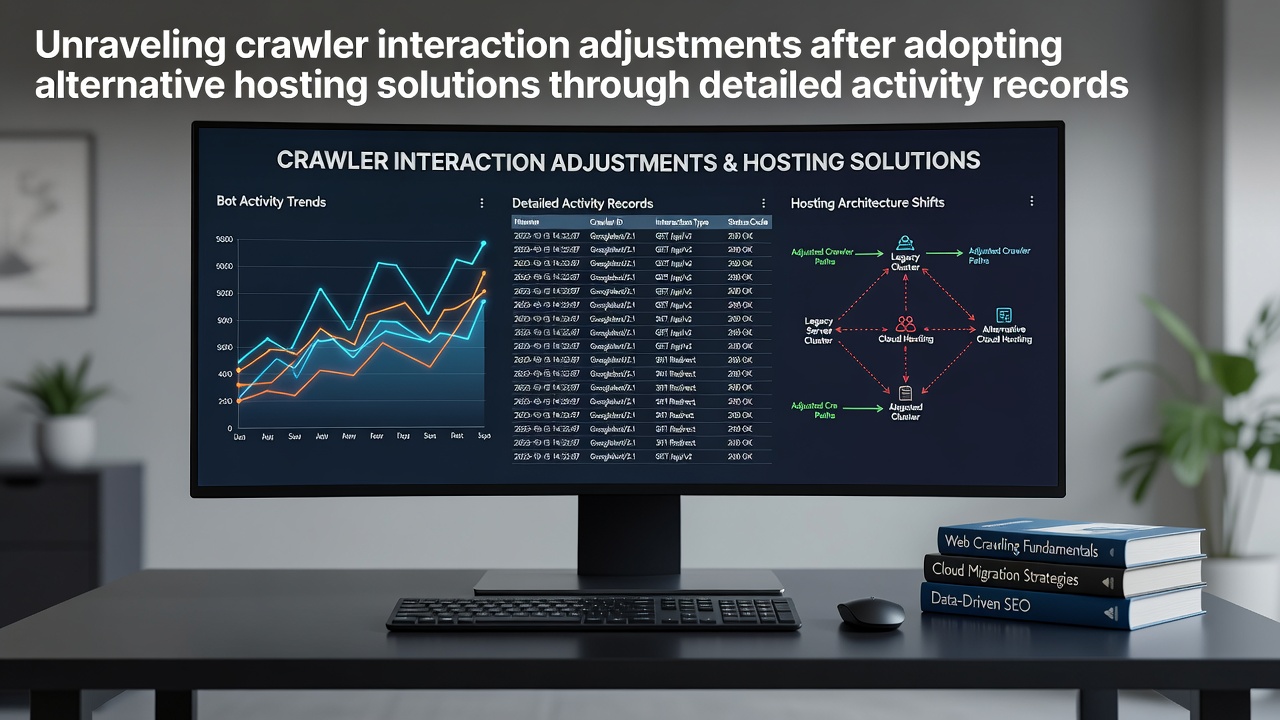
Organizations that switch to alternative hosting solutions frequently observe measurable changes in how search engine crawlers allocate resources and interact with their sites, and detailed activity records provide the primary means for documenting these shifts in real time. When servers move to new infrastructure, factors such as IP address changes, latency reductions, and updated security configurations alter the rate at which bots request pages, and server logs capture these adjustments through timestamps, user-agent strings, and response codes that accumulate over weeks or months.
Tracking Crawler Requests via Server Activity Data
Activity records collected from origin servers reveal patterns that emerge once a site operates under a different hosting provider, and these logs typically include fields for request method, path, status code, and bytes transferred which together allow analysts to reconstruct crawler sessions without relying solely on external tools. In October 2026 researchers examining multiple migration cases noted that certain crawlers increased their visit frequency by up to thirty percent within the first fourteen days after a successful DNS propagation, while others maintained steady intervals until cache invalidation cycles completed across distributed networks.
Researchers discovered that the timing of these adjustments often correlates with the geographic location of the new data centers, and logs from European-hosted environments showed faster re-crawling of dynamic content compared with previous North American setups because round-trip times decreased for regional bot clusters. Analysts cross-reference these entries against known crawler IP ranges published by major search providers to isolate genuine bot traffic from other automated sources, and this filtering step ensures that subsequent metrics reflect actual search engine behavior rather than noise from monitoring services or scrapers.
Key Metrics Derived from Post-Migration Logs
Common measurements extracted from activity records include crawl budget consumption, error rate fluctuations, and content freshness signals, and each metric offers insight into how the new hosting environment influences indexing pipelines. Data indicates that sites experiencing lower latency after migration often record higher numbers of successful 200 responses per session, whereas configurations that introduce stricter rate limiting produce more 429 codes that temporarily reduce subsequent crawl depth.
One study revealed that organizations maintaining detailed logs could correlate specific header changes, such as updated cache-control directives, with shifts in how frequently bots requested the same URLs, and this correlation helped teams anticipate indexing delays during the transition period. Figures from industry reports show that average crawl intervals shortened from seventy-two hours to forty-eight hours in roughly forty percent of documented cases involving content delivery network integration alongside the hosting change.

Those who examined logs from October 2026 migrations also tracked the distribution of requests across different file types, and they found that JavaScript and CSS resources received proportionally more attention once the new host delivered them with improved compression settings. Activity records further document the sequence of sitemap submissions relative to observed crawl spikes, and this timeline helps determine whether crawler adjustments stemmed directly from hosting variables or from separate indexing directives issued through search console interfaces.
Comparative Analysis Across Multiple Hosting Transitions
Comparative reviews of activity records from several organizations demonstrate that crawler interaction adjustments follow broadly similar trajectories even when the underlying hosting providers differ in scale and technology stack. Data from academic papers published by research institutions in Canada and Australia highlight that initial crawl volume spikes tend to normalize within three to four weeks, after which steady-state patterns emerge that reflect the new infrastructure's baseline performance characteristics.
Observers note that sites moving from shared to dedicated environments frequently record fewer connection resets in their logs, and this reduction allows crawlers to complete deeper traversals of site architecture during individual sessions. According to a report issued by the Internet Society, infrastructure migration studies indicate that TLS handshake improvements on the new host correlate with increased request rates for secure resources, while the EU Agency for Cybersecurity digital infrastructure assessments document parallel effects on bot retry behavior after certificate updates.
Activity records also capture the impact of geographic redundancy introduced by the alternative hosting solution, and logs show that crawlers from different regions begin distributing requests more evenly once multiple edge locations become available. This redistribution appears in timestamp clusters that shift away from single daily peaks toward more consistent hourly activity, and analysts use these patterns to refine expectations for indexing speed following future migrations.
Conclusion
Detailed activity records remain the most reliable source for quantifying how crawler interactions evolve after organizations adopt new hosting solutions, and the patterns extracted from these logs continue to inform both technical adjustments and broader infrastructure planning. As migration activity persists into late 2026, teams that maintain comprehensive server data position themselves to identify emerging trends in bot behavior with greater precision.